
The Joy of Being a Book Midwife
After I published my first children's books, I was surprised by how many people wanted to know how I had done it. People would approach me and say, "I've always wanted to write a children's book," or "I have an idea for a story." They had manuscripts tucked away in desk drawers, stories they wanted to share with their grandchildren, or creative dreams they had been carrying around for years.
Many of them didn't know where to begin. Others had written a manuscript but had no idea what came next. They were asking the same questions I struggled with: How do you know if a manuscript is ready? How do you find an illustrator? How do you create a book that looks as professional as something produced by a major publishing house?
That is how I found myself working as a coach for aspiring authors who wanted the creative freedom and control that comes with indie publishing.
One of my clients recently described my role as "midwifing” books, and that captures exactly how I think about this work. The authors I work with already have the story. My role is not to insert myself into their creative work. My role is to help them bring it safely into the world.
The Democratization of Dreams
Once upon a time, self-publishing carried a stigma. So-called "vanity presses" were viewed as the last resort of unskilled amateurs whose work wasn't good enough for traditional houses. In many cases, the criticism was deserved; too many books were rushed into print without professional editing and design. It was pretty easy to distinguish between books that were self-published and traditionally published.
That is no longer the case. Although there are still plenty of self-published books that could use a good editor, many are indistinguishable from the books released by the big publishing houses. The gates that were guarded by a tiny elite have been blown wide open by technology, and that technology is enabling human dreams.
In the process, it has become an economic force. According to Grand View Research, the global self-publishing market is projected to reach nearly $6 billion by 2033, outpacing the slower growth of traditional publishing.
That explosion you hear? It's the sound of millions of voices finally being heard.
The Legacy Impulse
There are so many reasons people are driven to create books. Most of the writers I work with are, like I was, motivated at least in part by legacy—they want to leave something tangible and meaningful behind for future generations. For us legacy writers, books are physical expressions of what we care about most. So when an author entrusts me with a manuscript, I know they are sharing a piece of themselves.
The authors I’ve worked with have carried their stories around for years, either in their heads or in manuscript. For them, deciding to put their story into tangible form was not a decision made on impulse.
It required carving out time from busy lives, revising drafts, and pushing through the self-doubt that often accompanies the creative process. Many wrestled with questions familiar to many of us writers: Is this story good enough? Will anyone care? Who am I to fancy myself an author?
When they finally hold their finished book for the very first time, the emails, texts, and photos they send me are full of the same thing: sheer pride. They take me right back to the joy of finally being able to show my granddaughter the book I had written for her.
Knowing I played a part in helping someone else reach that same milestone is incredibly satisfying. Had I waited for a industry gatekeeper—an agent or publisher—to open the door for me, I might never have discovered how much I love helping others walk through it themselves.
A Mostly True Family Tale + Supporting Rescue Animals
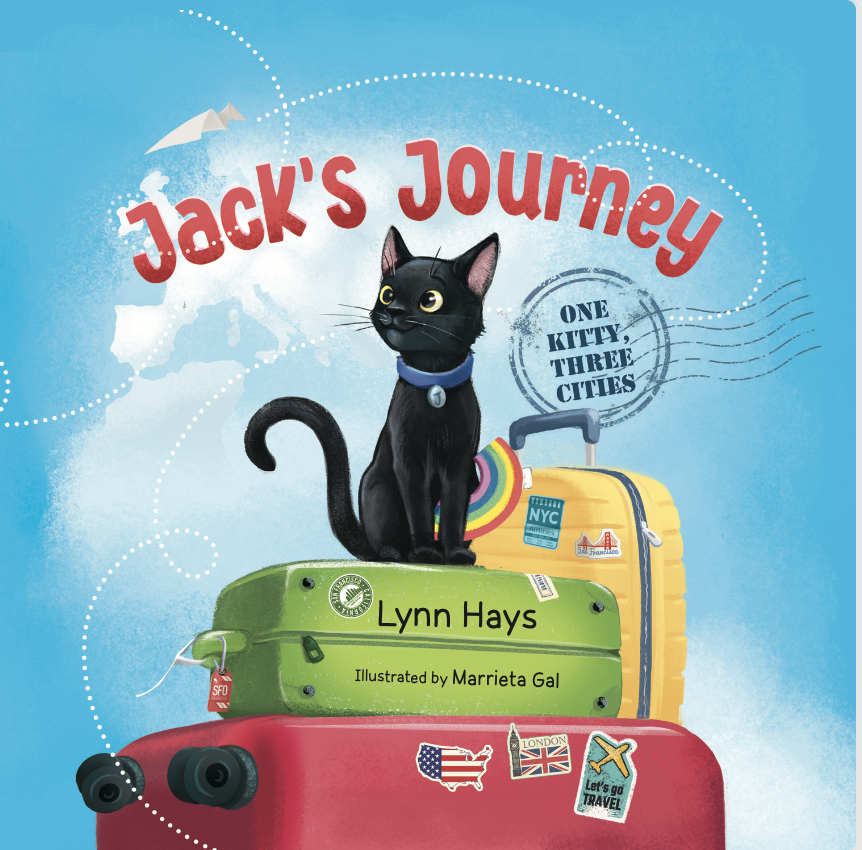
My most recent book midwifery project was the mostly true story of a little black cat who found his forever home, by Lynn Hays. Lynn added a “Time for Learning” section after the story to educate children about rescue animals. “I’ve since donated copies to a thrift shop that supports our local animal rescue, and I’ve donated copies to local animal rescue and rehabilitation centers to read at their children’s story times,” says Lynn.
