Five Writing Lessons from an Unexpected Obsession
An irrational fear of mountain lions led me to an unexpected obsession and important lessons in creative writing.
This story begins with my desire to bond with my brother Al, a certifiable wilderness badass, or maybe just certifiable. At the age at which Americans enter the Medicare rolls, he bikepacked 1,500 miles of the Great Divide Mountain Bike Route, from Banff, Alberta, Canada to Steamboat Springs, Colorado—passing through grizzly country on the first 800 of those miles.
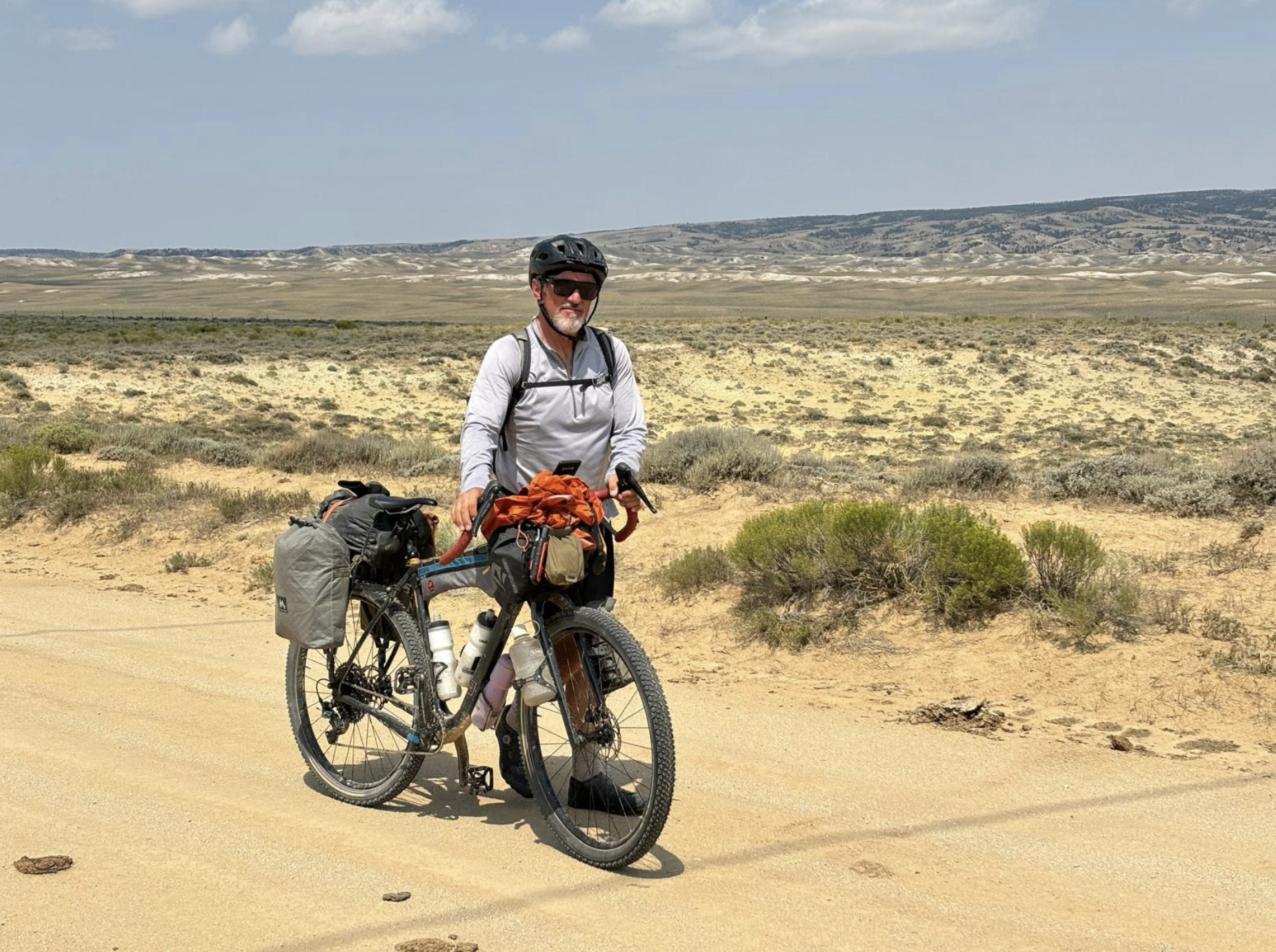
My badass brother Al bikepacking the Great Divide Mountain Bike Route.
For a time, Al and his wife (and my closest friend) Karen lived in Colorado, where they shared a love of hiking and camping. During my frequent visits, weather permitting, we would hike a weenie trail in the Rockies, chosen out of respect for my considerable limitations as an outdoorswoman. That the trails were well-traveled didn't lessen my fear of being stalked by mountain lions skulking among the aspen.
On one hike, when my much braver and more athletic sister Therese was also visiting, we all went hiking together when the last patches of snow were still on the ground. Midday, Al and I stopped in a clearing while Therese and Karen kept going. Al promptly lay down for a quick nap. Asleep and inattentive to danger, he looked like prime picnic fare for the mountain lions I was sure were lurking nearby. So I did what any rational big sister would do: Found the two biggest sticks I could comfortably heft and stood guard, gifting Al, Karen and Therese with a story they delight in recounting to this day.
The Obsession Takes Hold
Al and Karen assured me my fears were unfounded; mountain lions are shy and actually kill very few people. But that still wasn't zero people and, in an attempt to gain perspective, I researched the subject exhaustively. Thus began my enduring fascination with adventure porn.
Years later, concentrating on my development as a creative writer, I began to read more attentively. As an adjunct writing professor, I also looked for lessons on writing from unexpected places that I could bring to my graduate students. Lately, I'm finding them in the work of writers who have deep expertise in elements of the natural world that seem exotic and out of reach to me.
Enter Kevin Fedarko
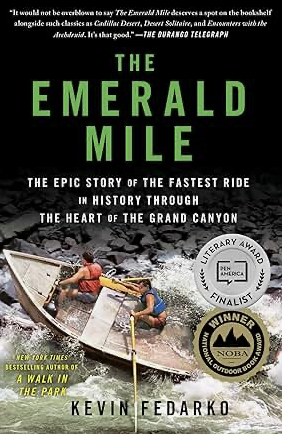
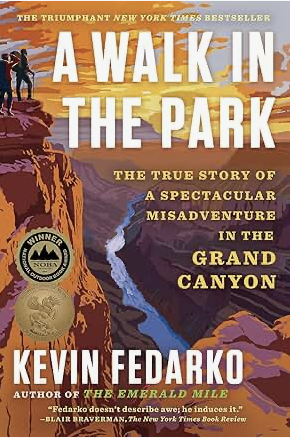
My current obsession is the work of Kevin Fedarko, author of The Emerald Mile and A Walk in the Park. His work is a masterclass in narrative nonfiction, from which I extracted five lessons that any writer, couch jockey or otherwise, can use to elevate their craft:
1. Radical Clarity Through Concrete Detail
Fedarko doesn’t just describe landscapes; he unearths them. He uses such vivid, concrete details that you can draw a mental picture of places you've never seen and feel the grit of canyon dust on your sunburnt skin. He reminds us that abstract imagery leaves readers adrift, but specific sensory details ground them securely in the story.
2. Fresh, Unexpected Metaphors
That clarity is dialed up by his skilled use of similes and metaphors. Fedarko gives a wide berth to clichés, finding fresh language to keep his readers engaged and marveling at his powers of observation. In A Walk in the Park, he writes bluntly about his misadventures in the Grand Canyon, “…one screwup after another…a string of failures like a tawdry necklace of fake pearls.” He describes “fat clouds” with “sunken underbellies,” and “twisted skeletons of a few dead piñon trees” that “arose like watchmen, with their fingers pointing toward the sky.” His writing is a testament to the idea that a well-chosen metaphor isn't there to dress up the surface. It's what adds depth and muscle to the prose.
3. Authority Without Arrogance
Throughout his narratives, Fedarko uses precise names instead of generic nouns, offering enough context or explanation so the reader can follow along no matter how scientific or unfamiliar those nouns might be. He doesn't write to the lowest common denominator of understanding but trusts his reader to figure it out. This grounded expertise gives his writing credibility and authority, while respecting and educating the reader. In The Emerald Mile, for example, he introduces us to “the arcane art of reading whitewater” by spending nearly two full pages explaining river hydraulics, using language so dynamic and vivid we can’t help but ride along.
4. Masterful Pacing and Tension
Fedarko is a patient storyteller. He takes the time to orient us to unfamiliar people and places, allowing us to absorb his ideas. But he also maintains narrative momentum, toggling between reflection and conflict to carry the story forward. Balancing exposition with conflict is a tightrope act, and Fedarko toes that line masterfully.
5. The Universality of Obsession
Fedarko writes about people pursuing goals that many of us would consider impossible, irrational, or both. Yet his stories never feel implausible because they're ultimately about something familiar: obsession. We don't have to want what his subjects want. We only have to recognize the feeling of wanting something so intensely. The lesson for writers is that the more specific and singular the obsession, the more universal it becomes. When we understand what compels a person to keep going, we'll follow them almost anywhere.
The Final Word
Which is how a woman armed with two sticks and an exaggerated fear of mountain lions ended up taking writing lessons from a man who walked the length of the Grand Canyon for a story. The hunt for a great story is an obsession I can relate to.
I’ll leave the 1,500-mile bikepacking trips to my brother Al and the Grand Canyon expeditions to Kevin Fedarko. My job—our job as writers—is to study how those obsessions get translated into art and learn how to bring the wild terrain of human experience to the page.