
The Writing Life I Almost Missed
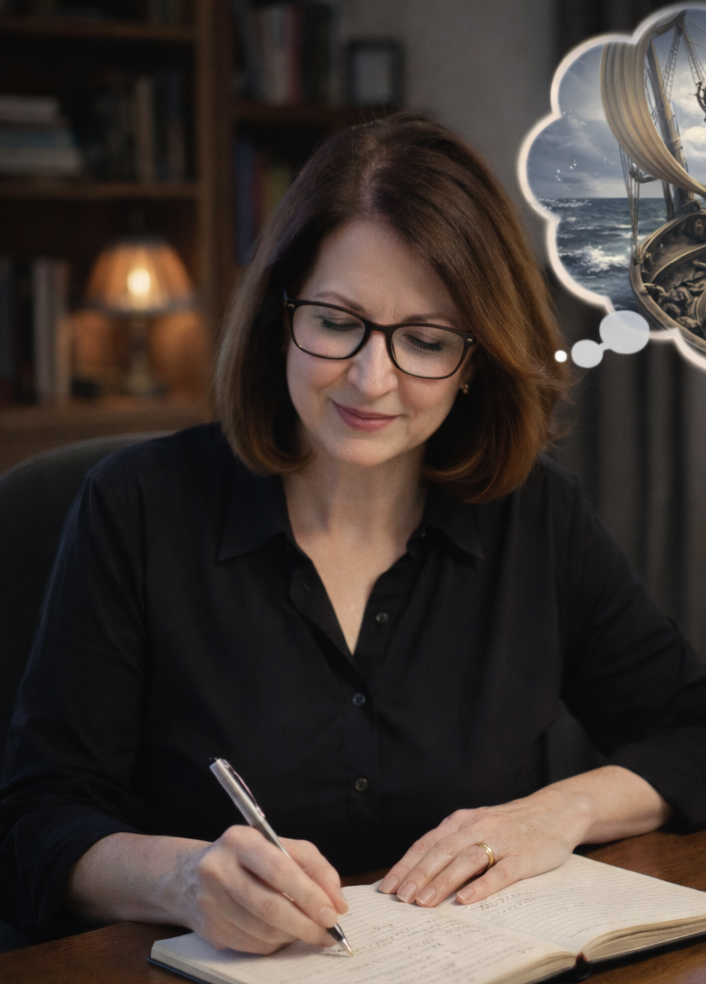
I found my way to creative writing well after I thought my potential had reached its sell-by date. I'd harbored dreams of being a writer since I learned to read, but I thought I'd already sold it off to a 25-year career in corporate communications. After writing for so long in what we PR types call the "brand voice," I didn't know what my own voice sounded like.
I'd built a career on my writing skills but didn't consider myself "a writer." I started wondering if "I love to write" was a lie I'd been telling myself for years. After long days at work, the last thing I wanted to do when I got home was face another blank page. If I truly loved the writing process, wouldn't I feel a compulsion to write anyway?
On the rare occasions I wrote something creative, I tucked it away in a drawer, convinced it wasn't good enough to share. Creative writing became one of those things I meant to do someday.
It was corporate burnout that led me to my first creative writing epiphany. I had an all-consuming job that I (usually) loved, but in a location I most definitely did not. Florida was too hot and too far from home. I was lonely and hadn't managed to develop much of a social life, in large part because I skew introverted and ended my long days drained of energy. So when the work pressures built, I had no release valve. I had made a four-year commitment, so quitting was out of the question, and most jobs in those pre-Covid days weren't portable. I was about as corked-up and miserable as I'd ever been.
The Turning Point
One long weekend, adrift as usual when off duty, I was looking for something to do when I spotted a notice about a writer's workshop at the Kravis Performing Arts Center in West Palm Beach. It was led by the Pulitzer Prize-nominated novelist and playwright Julie Gilbert. I sent my application, along with the required writing sample, and hoped for the best. When I was accepted, I wondered whether the short story I'd submitted showed promise or simply proved how much I had to learn.
I got the answer during our first class. After a brief lecture on craft, Julie read my submission aloud.* When she reached the final line, she set the pages down, looked around the room, and said something I'll never forget:
"And that is how it's done."
A champagne cork popped inside of me, and I felt the fizz of real excitement. Though I was still years away from publishing my work, that workshop was my turning point.
What I got from Julie was more than encouragement. She required us to come to every class with two short stories written to prompts that she supplied. I had always assumed fiction was beyond my reach because I never knew where to find ideas, but writing to prompts made all the difference. They gave me a place to rummage around in for creative inspiration. But prompts were only half the equation.
I also discovered that my creativity thrived on externally imposed structure. Left to my own devices, I would let almost any mundane task elbow aside my creative writing time, but a deadline changed everything. Coming from a career where professionals simply do not miss deadlines—full stop—I was already conditioned to work methodically toward a target date, and that corporate discipline transferred over to my writing life.
Creating the Conditions
The months spent in Julie Gilbert's writing workshop showed me what I need in my creative writing life: a supportive writing community, structure, and creative nudges. It still took me a few years to put it all together and start publishing my work. Along the way, I went looking for the same kind of writing community that helped me get started. I found it in workshops, critique groups, and rooms full of writers who showed up regularly and encouraged one another. Those experiences taught me that writing may be solitary, but a writing life doesn't have to be.
I now have what I consider a writing practice. I write almost every day. I experiment with form and genre. I submit my work, and sometimes it gets accepted. When it doesn't, I don't sweat it. I'm a writer, and writers write.
If this journey has taught me anything, it's that creativity doesn't come from a passive state; I create the conditions for it.
That's what I'm trying to do at The Bramble. The Bramble is a place for people who want to create more consistently, who are looking for ideas to inspire new work, and who appreciate the company of others who are trying to do the same. Some of us write for publication. Some write for family. Some write because a story has been clamoring for attention and it's time to give it its due.
What we have in common is a desire to keep creating.
I'm glad you're here.
*Here’s the short story Julie read, which was accepted years later by Flash Fiction Magazine: The Dancer.
